Following Cash Movements Between Betting Exchanges and Bookmakers in Premier League Matches
Rafael Neumann · Oct 4, 2026
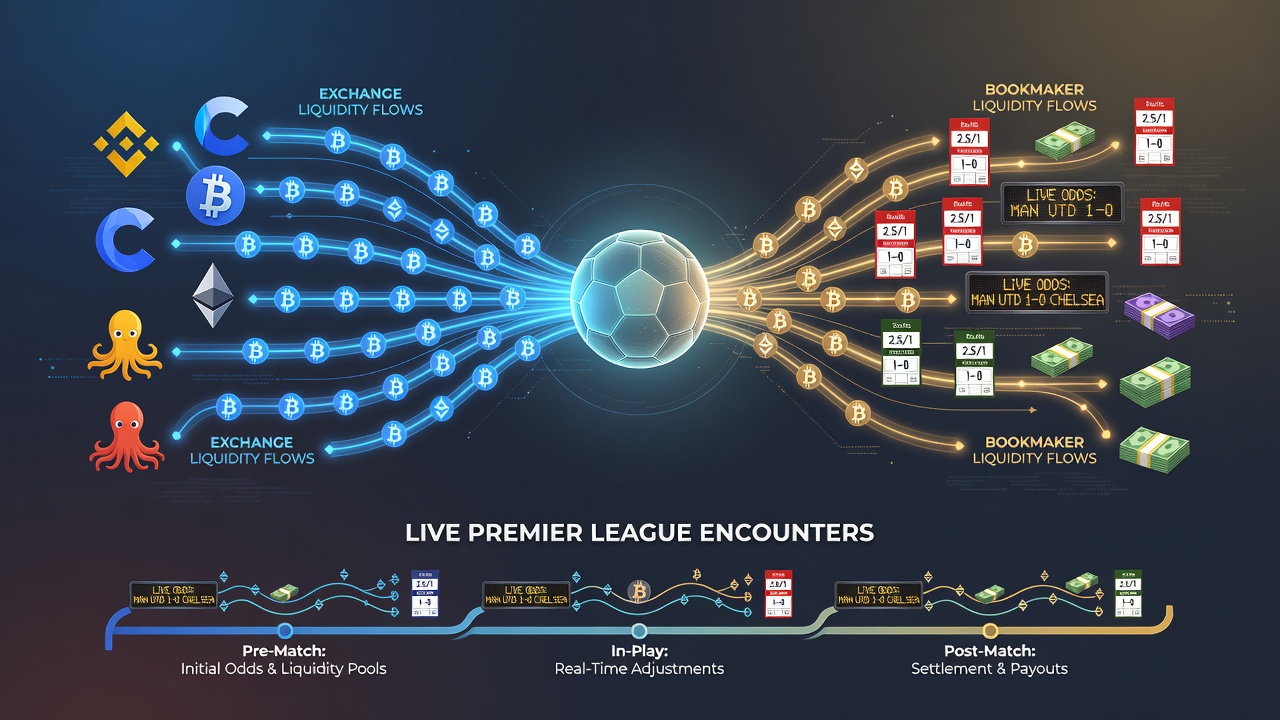
Following Cash Movements Between Betting Exchanges and Bookmakers in Premier League Matches
Premier League encounters generate rapid shifts in betting markets, and observers note how liquidity travels between exchanges and traditional operators as goals, cards, and substitutions unfold. Data from industry reports indicate that these flows often accelerate in the final twenty minutes of matches, when volume spikes and odds adjust across platforms in real time. Those who track order books observe that exchanges frequently set the benchmark prices, while bookmakers respond by mirroring or layering their own markets to capture opposing sides of the same wagers.
Core Mechanics of Liquidity Transfer
Exchanges operate on a peer-to-peer model where bettors place opposing positions directly against one another, creating visible depth at each price point. Traditional bookmakers, by contrast, take the other side of every bet and manage risk through margin adjustments and liability caps. When a large order hits an exchange during a live match, bookmakers often pull their own lines or widen spreads to avoid exposure at outdated odds, according to market structure analyses from the European Gaming and Betting Association. This reaction can redirect volume back to the exchange, where the original liquidity originated.
Researchers studying order flow during the 2025-26 season documented instances where a sudden goal in the first half triggered a cascade: exchange prices moved first, bookmakers followed within seconds, and then smaller exchanges adjusted to maintain competitiveness. The pattern repeats across fixtures because most operators subscribe to the same data feeds that update live statistics instantly. Those monitoring these movements find that the ball stays in the exchanges' court during high-volatility periods, while bookmakers regain ground in lower-stakes intervals such as set-piece battles.
Live Premier League Patterns Observed in 2026
October 2026 fixtures provided fresh examples of these dynamics. Midweek games involving sides with strong attacking records showed pronounced liquidity migration toward exchanges once the first goal arrived before the thirtieth minute. Figures from betting technology providers reveal that matched volumes on exchanges rose by double-digit percentages in those windows compared with pre-match baselines. Traditional operators responded by tightening maximum stakes on certain outcomes, which in turn pushed recreational bettors toward platforms offering greater depth at the new prices.
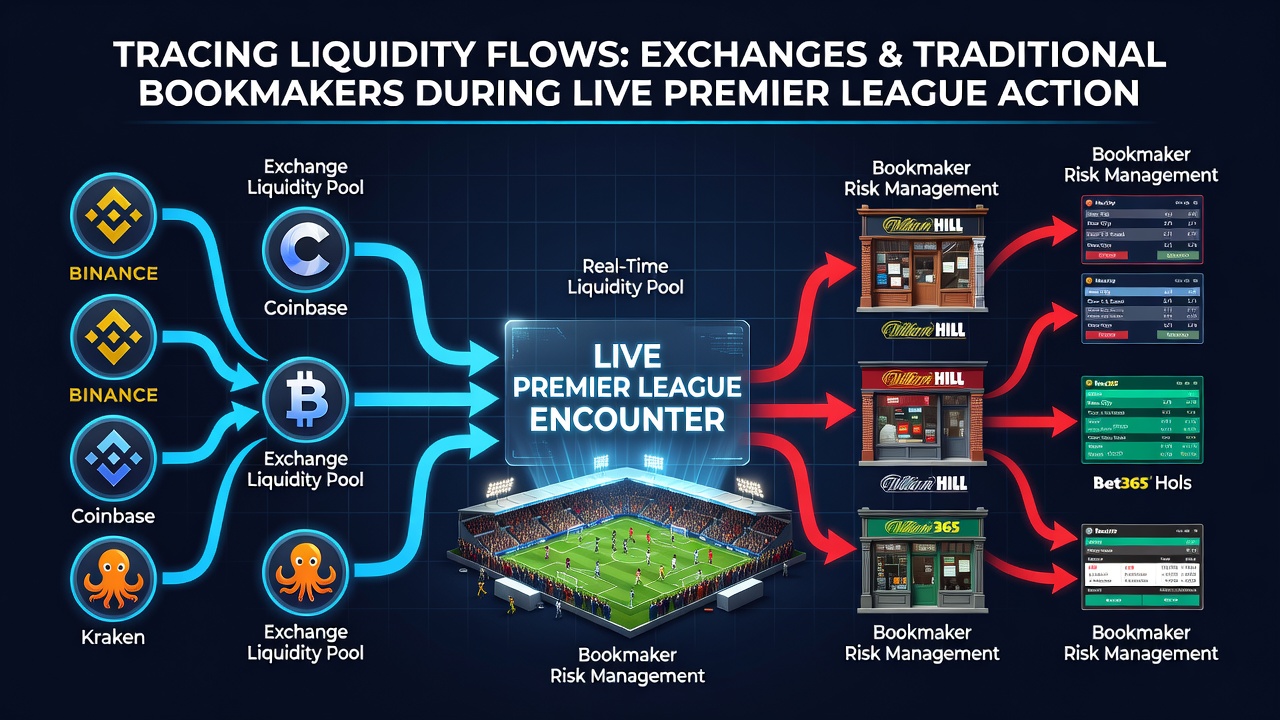
What's notable is how weather delays or VAR checks create brief pauses that allow liquidity to settle. During one October encounter, a lengthy check on a potential penalty saw exchange liquidity thin out momentarily before bookmakers stepped in with adjusted lines, drawing some volume back. Observers note that such interruptions highlight the difference in risk models: exchanges reflect pure market consensus, whereas bookmakers incorporate their own exposure limits and customer segmentation data. A study released by the University of Sydney's gambling research unit in early 2026 examined similar patterns across multiple leagues and confirmed that Premier League matches exhibit the fastest cross-platform liquidity migration of any major football competition.
Technology and Data Infrastructure Driving the Flows
Automated trading systems and API connections now link most major platforms, allowing near-instantaneous price discovery. When an exchange order book deepens at a particular scoreline, algorithms at traditional operators detect the shift and recalibrate their offerings within milliseconds. This infrastructure means that liquidity rarely stays isolated for long; instead, it circulates until equilibrium returns. Those who have examined transaction logs from October 2026 report that the largest movements coincided with high-profile matches featuring title contenders, where both sides attracted substantial interest from professional syndicates operating across multiple accounts.
Industry organizations tracking platform performance note that smaller bookmakers sometimes act as liquidity takers rather than makers during peak live periods, routing unmatched bets onward through white-label exchange partners. This secondary routing keeps overall market depth intact even when individual operators hit internal limits. The result appears in aggregated data sets showing consistent total matched volumes across the ecosystem, regardless of where the initial bet originated.
Conclusion
Tracing these liquidity flows reveals a tightly connected system in which exchanges and traditional bookmakers continually influence one another during Premier League action. October 2026 data underscores that the speed of information transfer and the structure of each operator's risk controls determine how money moves in real time. As technology evolves, the pathways between platforms are likely to remain central to understanding live betting markets across the competition.